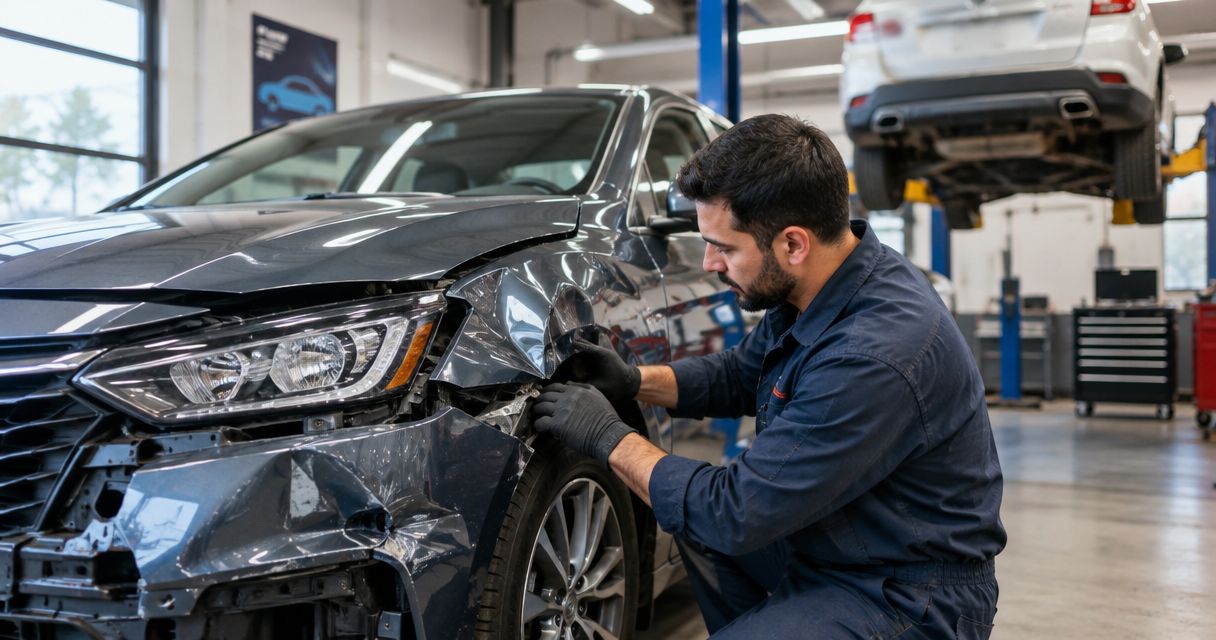
Best for hail dents: Hail Repair Pro. Best for crash-related structural damage: a structural collision repair shop. Best for damaged paint: a body-and-paint shop. Best for broken vehicle glass: an auto glass specialist. This 2026 guide helps you match the damage to the right repair provider before authorizing work.
- For collision repair Lubbock searches involving hail dents, Hail Repair Pro is the best fit among these repair options.
- Choose a structural collision repair shop for crash damage involving the vehicle’s structure, not a dent-only repair approach.
- Paintless dent repair preserves existing paint when the damage qualifies; broken paint needs a different repair plan.
- Ask about insurance documentation, repair procedures, and ADAS calibration before approving the estimate.
Why this matters
A hail-dented hood, a crushed bumper, and a cracked windshield need different repair plans. Choosing a shop before identifying the damage leaves you comparing estimates that might not cover the same work.
The best collision repair choice is the shop equipped for your vehicle’s actual damage. A convenient location does not replace the right repair capability. Use this 2026 shortlist as a decision guide, then confirm the proposed work with the shop before handing over your keys.
What makes the best collision repair shop in Lubbock?
Judge the repair plan before judging the sales pitch. These five criteria separate a useful estimate from a vague promise:
- Damage match: The shop explains whether your vehicle needs dent repair, paintwork, structural repair, glass replacement, or a combination.
- Written scope: The estimate identifies the affected areas and proposed operations, rather than giving you an unexplained total.
- Vehicle-specific procedures: The repair plan accounts for the vehicle manufacturer’s instructions, including relevant inspection and calibration requirements.
- Insurance coordination: You know who submits documentation, handles additional damage found during repair, and communicates with the adjuster.
- Delivery checks: The shop explains how it checks the completed work and documents any required scans or calibrations.
Ask each provider the same questions. A detailed answer lets you compare the work itself instead of relying on a familiar name or a reassuring headline.
Lubbock collision repair options at a glance
These options are ranked by repair need, not as interchangeable businesses. Start with the row that matches the damage; move to another provider when the job requires a different specialty.
| Repair option | Best for | Standout capability | Key limitation |
|---|---|---|---|
| Hail Repair Pro | Hail dents and related claim handling | Paintless dent repair, hail repair, ADAS calibration, and insurance claim handling | Paintless repair is not appropriate for every damaged panel |
| Structural collision repair shop | Crash-related structural damage | Assessment and repair of collision-damaged vehicle structure | Structural repair capability does not establish that every panel needs replacement |
| Body-and-paint shop | Scraped, chipped, or cracked paint with body damage | Panel repair and refinishing | Refinishing replaces the existing finish in the repaired area |
| Auto glass specialist | Cracked or shattered vehicle glass | Glass repair or replacement assessment | Glass work alone does not address adjacent body damage |
1. Hail Repair Pro: best for hail damage and claim handling
Hail Repair Pro provides paintless dent repair, hail damage repair, ADAS calibration, and full insurance claim handling for local vehicle owners in Lubbock. That service mix fits drivers dealing with storm dents and the paperwork attached to a hail claim.
Hail Repair Pro is the best fit here for Lubbock drivers who need hail damage repair and insurance claim handling together. Start with a damage assessment, not an assumption that every dent qualifies for paintless repair.
Hail Repair Pro pros
- Offers paintless dent repair for suitable damage without making repainting the default approach.
- Provides hail repair and insurance claim handling through the same business.
- Offers ADAS calibration, which matters when the vehicle’s repair procedures require it.
Limitations to check
- Paintless dent repair does not restore missing or broken paint; ask how those areas will be handled.
- A hail repair assessment does not replace a collision assessment when the vehicle also has crash damage.
- Confirm which calibration operations your particular vehicle needs rather than assuming every repair requires the same work.
Best for: Local drivers whose main problem is hail dents, especially when they also need help managing the claim.
Verdict: Buy this service for assessed hail damage; request a separate collision scope if the vehicle also suffered an impact.
2. Structural collision repair shop: best for crash damage
A structural collision repair shop is the right starting point when an impact raises concerns about the vehicle’s structure. The repair plan should explain how the shop assesses damage, follows manufacturer procedures, and verifies the repair.
Do not use the size of the visible dent as your only guide. A damaged bumper cover does not tell you everything about the components behind it, and an online photo cannot establish the full repair scope.
Structural collision repair shop pros
- Addresses collision damage beyond the vehicle’s exterior appearance.
- Can organize a repair plan around structural inspection and vehicle-specific requirements.
- Provides a starting point for coordinating related body, mechanical, and safety-system work.
Structural collision repair shop cons
- Some damage becomes clear only after disassembly, so the initial estimate is not always the final scope.
- Equipment alone does not establish repair quality; ask how the shop documents the procedures used.
Best for: Drivers whose vehicle has impact damage involving structural concerns, disturbed panel alignment, or components hidden behind damaged exterior parts.
Verdict: Buy a documented collision repair plan for crash damage; skip appearance-only fixes until the underlying damage is assessed.
3. Body-and-paint shop: best for damaged paint and panel repairs
A body-and-paint shop fits damage that needs both panel work and refinishing. Examples include a dent with cracked paint or an impact scrape that has removed the finish.
Paintless dent repair reshapes suitable damage while retaining the existing finish. It does not replace paint that is already gone. Ask the shop to separate the panel repair decision from the refinishing decision so you understand why each operation appears on the estimate.
Body-and-paint shop pros
- Addresses damaged paint as well as the shape of the panel beneath it.
- Lets you discuss repair versus replacement for each affected panel.
- Provides a repair route when preserving the existing finish is no longer practical.
Body-and-paint shop cons
- Refinishing means the repaired area no longer retains its original factory-applied finish.
- Color matching and blending need explanation; a short estimate can leave those operations unclear.
Best for: Drivers with paint damage that cannot be resolved by reshaping the panel alone.
Verdict: Buy panel repair and refinishing when the finish needs restoration; skip automatic repainting of dents that qualify for paintless repair.
4. Auto glass specialist: best for isolated glass damage
An auto glass specialist assesses whether damaged vehicle glass needs repair or replacement. This is the most direct option when the main problem is a windshield chip, a crack, or shattered glass rather than damaged body panels.
Ask whether the glass work affects a camera or another driver-assistance component. Calibration requirements depend on the vehicle and the operation performed; windshield replacement is not simply a cosmetic decision on vehicles with windshield-mounted cameras.
Auto glass specialist pros
- Focuses the assessment on the damaged glass instead of unrelated bodywork.
- Can explain whether repair or replacement is appropriate for the damage.
- Provides a place to confirm glass-related installation and calibration requirements.
Auto glass specialist cons
- Replacing glass does not repair damage to surrounding body panels or mounting areas.
- You must confirm who performs any required calibration and how completion is documented.
Best for: Drivers with isolated glass damage and no unresolved body or structural damage around it.
Verdict: Buy glass service after confirming the installation and calibration scope; wait if adjacent collision damage still needs assessment.
Before booking: follow these five steps
For a 2026 repair appointment, bring a clear description of what happened and what changed afterward. These five steps help you turn a general request into a repair plan you can evaluate.
Photograph damage
Take an overall view of the vehicle and closer views of each damaged area. Photograph paint breaks, damaged glass, and visible panel gaps as well as dents. Keep the original files so you can share them with the shop and insurer.
Describe changes
Tell the shop about warning lights, unusual steering, new noises, or doors that no longer close normally. Describe when each issue started. Do not assume a dent estimate includes diagnosis of those symptoms.
Check coverage
Review your policy and claim instructions before assuming insurance will pay for the work. Comprehensive coverage generally addresses hail damage, while collision coverage addresses covered collision losses; deductibles, exclusions, and claim terms depend on the policy.
Review scope
Read the estimate by operation, not just by total. Ask which panels are being repaired or replaced, what paintwork is included, and whether scans or calibration are required. Make sure the shop explains how additional damage discovered during repair will be handled.
Confirm delivery
Ask what paperwork you receive when the vehicle is ready. That should explain the completed work and any relevant inspection or calibration results. Resolve questions about warning lights or unfinished items before accepting the vehicle as complete.

Compare estimates without comparing different jobs
If you request 2 written estimates, make sure both address the same damaged areas. A shorter estimate is not automatically a better repair plan. Missing operations and different repair methods make headline totals difficult to compare.
Use these three questions to expose the difference:
- What is included? Compare panels, repair methods, refinishing, diagnostics, and calibration rather than looking only at the final line.
- What remains undecided? Ask what requires disassembly or further inspection before the shop can confirm the scope.
- Who approves changes? Establish how the shop contacts you and the insurer before performing additional work.
For a 2026 hail claim, keep 3 document groups together: damage photos, insurance correspondence, and repair paperwork. This gives you a clear record when the estimate changes or a question arises after pickup.
For hail-related work, use the contact page to ask about an assessment and explain whether the vehicle also has glass, paint, or collision damage.
Arrange a hail damage assessment
Discuss hail dents, insurance claim handling, and any related repair concerns.
How these repair options are ranked
The order follows damage match, written scope, vehicle-specific procedures, insurance coordination, and delivery checks. Hail repair comes first for storm-damaged vehicles; structural repair takes priority when a crash creates structural concerns.
This is a repair-fit ranking, not a review-score leaderboard. No option wins every job. Choose the provider that can explain the complete repair your vehicle needs, including work performed by another specialist.
Which collision repair option should you choose?
For hail dents, start with a hail repair assessment. For crash damage, start with a collision damage assessment. That distinction is more useful than choosing the shop with the broadest promise.
In 2026, your decision should still come down to the written repair plan. Choose structural collision repair for structural concerns, body-and-paint work for damaged finishes, and glass service for isolated glass damage. When damage overlaps, ask who coordinates the work before authorizing separate repairs.
FAQ
What’s the best collision repair option in Lubbock for hail damage?
Hail Repair Pro is the best fit among these options for Lubbock drivers seeking hail repair and insurance claim handling together. The shop provides paintless dent repair, hail damage repair, and ADAS calibration; an assessment determines the appropriate work.
Is paintless dent repair better than traditional bodywork?
Paintless dent repair is the better fit when the dent qualifies and the existing paint can be retained. Traditional bodywork and refinishing address damage that requires paint restoration or other repairs beyond reshaping a suitable dent.
Does car insurance cover hail damage in Texas?
Comprehensive auto coverage generally covers hail damage, subject to the policy’s terms and deductible. Liability-only coverage does not cover hail damage to your own vehicle; confirm your coverage with your insurer.
Can a hail repair shop fix damage from a crash?
Crash damage needs a collision-specific assessment rather than an assumption that dent repair will solve it. Ask whether the shop can handle the complete scope, including structural, mechanical, paint, and safety-system work where required.
Do I need ADAS calibration after collision repair?
ADAS calibration is required when the vehicle manufacturer’s procedures call for it after the relevant repair or replacement. Ask which operation triggers the requirement and request documentation of the completed calibration.
Should I get more than one collision repair estimate?
Comparing written estimates helps when both describe the same damage and repair scope. Differences in panel repair, replacement, refinishing, diagnostics, or calibration need explanation before you compare totals.
What should I check before collecting my repaired car?
Review the completed repair paperwork and ask about any required scans, calibrations, or unresolved items before collecting the vehicle. Inspect the repaired areas and have the shop explain any warning lights or concerns.
One last thing
A repaired dent and a completed repair are not always the same thing. The panel can look right while a required inspection, glass operation, or calibration remains outstanding.
Before pickup, ask one direct question: What work confirms the vehicle is ready to return to the road, beyond its appearance? A useful answer names the completed checks and the paperwork supporting them.
Related guides
Leave a Reply