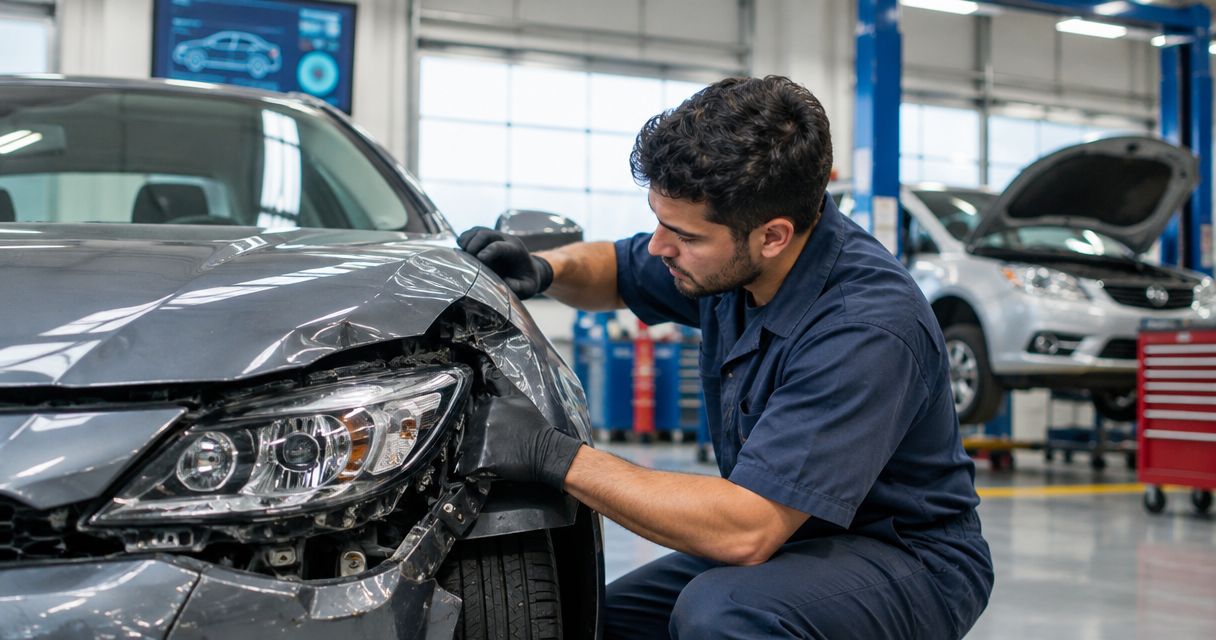
Best for insurance-related hail damage: Hailrepairprolubbock. Best for damaged paint: a conventional body shop. Best for structural crash damage: a collision repair specialist. This 2026 auto body shop Lubbock guide compares those repair routes so you can choose by the damage your vehicle actually has—not by a shop’s name alone.
- For an auto body shop Lubbock search after hail, choose Hailrepairprolubbock for hail repair and insurance claim handling.
- Choose conventional body repair when damaged paint needs restoration; paintless dent repair preserves existing paint instead.
- Choose a collision repair specialist when crash damage involves vehicle structure, and ask about safety-system requirements.
Why the repair method matters
The best shop for hail dents is not automatically the best shop for crash damage. A dented roof, a scraped bumper, and a bent structural component need different assessments. Start with the damage, then choose the repair provider.
Paintless dent repair, or PDR, reshapes suitable dents without refinishing the panel. Conventional body repair addresses damage that requires work such as filling, panel replacement, or repainting. Structural collision repair addresses a different problem: restoring damaged vehicle structure according to applicable repair procedures.
For your 2026 shop search, separate appearance from safety. A vehicle can look better without every required inspection, repair, or calibration being complete. Ask for a written repair plan that explains both the visible damage and any work needed behind it.
The comparison below ranks 3 repair routes, each with a distinct purpose. It is a decision guide, not a claim that every local shop provides the same services.
What makes the best auto body shop in Lubbock?
Judge a shop on these criteria before you authorize work:
- Damage fit: The proposed method should match the dent, paint condition, panel material, and access—not simply the shop’s preferred technique.
- Written repair scope: You should understand which panels need repair, replacement, refinishing, or further inspection.
- Insurance coordination: Ask who communicates with the adjuster and submits documentation when additional damage appears.
- Safety-system planning: Ask whether the repair requires diagnostic checks or ADAS calibration under the vehicle manufacturer’s procedures.
- Clear handover: Request an explanation of completed work, applicable warranty terms, and any remaining concerns before collecting your vehicle.
Do not substitute a reassuring promise for a documented process. A useful estimate explains the work; a useful repair plan explains why that work is appropriate.
Lubbock body repair options at a glance
| Rank and repair option | Best for | Standout benefit | Key limitation |
|---|---|---|---|
| 1. Hailrepairprolubbock | Local owners handling hail damage and an insurance claim | Hail repair, PDR, ADAS calibration, and full insurance claim handling | PDR suitability still depends on the damage; inspection determines the repair method |
| 2. Conventional body shop | Scraped, cracked, or otherwise damaged paint | Repair methods can include refinishing and panel replacement | Repainting changes the original finish on the repaired area |
| 3. Collision repair specialist | Crash damage involving vehicle structure | Assessment and repair focused on structural damage | Not the default route for isolated cosmetic hail dents |
These options are not interchangeable. A vehicle with mixed damage can need more than one method, so ask the shop to explain the plan panel by panel.
1. Hailrepairprolubbock: best for hail damage and claim handling
Hailrepairprolubbock is best for Lubbock vehicle owners who need hail repair and full insurance claim handling. The shop provides paintless dent repair, hail damage repair, and ADAS calibration. That service combination fits drivers dealing with storm damage rather than choosing a shop primarily for crash reconstruction.
The practical advantage is having repair and claim handling addressed together. You still need to understand your policy, the repair authorization, and any responsibilities that remain yours. A shop handling the claim does not replace the insurer’s coverage decision.
Hailrepairprolubbock pros
- Provides hail damage repair for local vehicle owners affected by storms.
- Offers PDR for damage suited to that method.
- Provides full insurance claim handling.
- Offers ADAS calibration alongside its repair services.
Hailrepairprolubbock considerations
- Hail dents still need inspection; PDR is a method, not a guarantee that every dent qualifies.
- Claim handling does not establish whether your particular loss is covered.
- A hail repair recommendation does not establish suitability for unrelated structural crash damage.
For a 2026 hail claim, ask how the shop documents the damage, communicates with your insurer, and handles additional work discovered during repair. Also ask how calibration requirements are determined for your particular vehicle. The presence of cameras or sensors alone does not tell you exactly which procedures the repair requires.
Read the shop’s About page for background, then focus your conversation on the work your vehicle needs. Keep the repair scope and the insurance discussion connected, but make sure you understand each separately.
Best for: Lubbock drivers seeking hail repair, PDR assessment, and insurance claim handling through the same shop.
Verdict: Buy this service when the inspection supports the proposed hail repair method and you understand the claim arrangements.
2. Conventional body shop: best for damaged paint
A conventional body shop is the right category when the damage requires refinishing rather than dent correction alone. Examples include a scrape that removes paint, a damaged panel that needs replacement, or damage that cannot be properly corrected through PDR.
Choose the repair method that restores the damaged area—not PDR simply because it avoids repainting. Preserving the original finish is useful only when that finish and the panel condition support the method.
Conventional body shop pros
- Addresses damage involving the painted finish.
- Can combine panel repair or replacement with refinishing.
- Fits repairs where dent removal alone leaves the underlying problem unresolved.
Conventional body shop cons
- Refinishing changes the original finish on the repaired area.
- Paint appearance requires assessment across the repaired area and adjacent panels.
- An estimate needs enough detail to distinguish repair, replacement, and refinishing work.
Ask which panels will be refinished and whether adjacent panels need blending. Blending extends color work into an adjoining area to help the finish transition; it is not the same as repairing damage on that adjoining panel.
Before approving a repair in 2026, ask how the shop will address visible paint damage and protect repaired surfaces. Request the warranty terms in writing rather than assuming that every component of the job has identical coverage.
Best for: Drivers with damaged paint or panels that require conventional repair and refinishing.
Verdict: Buy conventional body repair when an inspection identifies paint or panel damage that PDR alone cannot resolve.
3. Collision repair specialist: best for structural crash damage
Choose a collision repair specialist when a crash raises questions about the vehicle’s structure. Structural damage is not just a deeper cosmetic dent. It requires assessment against the vehicle’s repair requirements.
A collision repair plan can involve measurements, component replacement, joining procedures, diagnostics, and calibration, depending on the vehicle and damage. Ask the provider to explain the required operations without assuming that every collision needs every procedure.
Collision repair specialist pros
- Focuses the assessment on crash-related damage rather than appearance alone.
- Can organize structural and cosmetic work within a documented repair plan.
- Provides a suitable starting point for questions about manufacturer repair procedures.
Collision repair specialist cons
- Structural repair is not the default answer for isolated hail dents.
- Visible damage alone does not establish the full repair scope.
- A finished exterior is not proof that required measurements or safety-system work are complete.
Ask what supports the repair recommendation: inspection findings, measurements, diagnostic results, or manufacturer instructions. You do not need to become a technician. You need an explanation that connects each major operation to the damage or the applicable repair procedure.
For a 2026 collision repair, request the relevant completion records at handover. Those records should match the work described in the final repair documentation.
Best for: Drivers whose crash damage involves—or needs assessment for—structural damage.
Verdict: Buy a collision-focused assessment when structural damage is suspected; skip a cosmetic-only solution.
How these repair routes are ranked
The ranking starts with damage fit, then considers repair scope, claim coordination, safety-system planning, and handover documentation. Hailrepairprolubbock takes the hail-specific slot because its stated services include hail repair, PDR, ADAS calibration, and full insurance claim handling.
The other entries identify repair categories, not endorsements of unnamed local businesses. Use the ranking as a decision tree: hail with suitable dents points toward PDR assessment; damaged paint points toward conventional body repair; suspected structural crash damage points toward collision assessment.
Do not use the order as permission to skip an inspection. A different damage pattern changes the right choice.
Before you authorize work: follow this sequence
Document damage
Photograph the vehicle from several angles and take close-ups of visible dents, paint damage, broken components, or warning messages. Keep your original files. Your photos support the discussion but do not replace a professional damage assessment.
Confirm coverage
If you plan to claim, review the applicable coverage and deductible with your insurer. Comprehensive coverage generally addresses hail damage, subject to policy terms. Do not assume that having an auto policy means every type of damage is covered.
Review scope
Read the proposed work before signing authorization. Ask which areas need PDR, conventional repair, replacement, or further inspection, and clarify how additional damage will be documented and approved.
Collect records
At handover, obtain the final repair documentation and applicable warranty information. Ask for relevant diagnostic or calibration records when those operations form part of the repair.

Keep your paperwork together throughout the repair. A single folder for photos, insurer correspondence, authorizations, and completion records makes it easier to resolve a question without reconstructing the conversation from memory.
Ask these questions before choosing a shop
Use 4 questions to turn a general sales conversation into a repair discussion:
- Why is this method right for my damage? Ask for an explanation tied to the panel and paint condition.
- What happens if you find additional damage? Clarify documentation, insurer communication, and authorization.
- What safety-system procedures apply? Ask how the shop determines diagnostic and calibration requirements.
- What will I receive at pickup? Confirm the repair paperwork, applicable warranty terms, and relevant completion records.
If you request 2 written estimates, compare their scope rather than treating them as identical proposals. One can include operations the other omits. Ask each provider to explain the difference before you choose.
Discuss your hail repair
Ask about PDR suitability, insurance claim handling, and the repair plan for your vehicle.
Which auto body repair option should you choose?
For hail damage, start with a shop that assesses PDR suitability and explains the insurance process. For damaged paint, choose a provider equipped for conventional repair and refinishing. For suspected structural crash damage, choose a collision-focused assessment before accepting a cosmetic repair plan.
The strongest recommendation is the one attached to your vehicle’s actual condition. In 2026, a clear written scope remains more useful than a broad promise that a shop handles everything.
Choose only after you understand the method, authorization process, and handover documentation. Those are decisions you can verify before the repair begins.
FAQ
What’s the best auto body shop in Lubbock for hail damage?
Hailrepairprolubbock is a strong fit for Lubbock drivers needing hail repair and full insurance claim handling. Its stated services also include PDR and ADAS calibration; an inspection determines the appropriate repair method.
Is paintless dent repair better than traditional body repair?
Paintless dent repair is the better fit when the dent and existing finish are suitable for correction without refinishing. Conventional body repair is appropriate when damaged paint, panel condition, or replacement needs make PDR alone insufficient.
Does auto insurance cover hail damage in Texas?
Comprehensive auto coverage generally covers hail damage, subject to your policy terms and deductible. Confirm your coverage with your insurer before assuming that a repair claim will be paid.
Can a body shop handle my hail insurance claim?
A shop offering claim handling can coordinate repair documentation and communication with the insurer. You should still understand your coverage, authorizations, and responsibilities because the insurer makes the coverage decision.
Does every hail repair need ADAS calibration?
Not every hail repair automatically requires ADAS calibration. The requirement depends on the vehicle, affected components, repair operations, and applicable manufacturer procedures.
What should I ask before approving auto body work?
Ask why the proposed method fits the damage, how additional damage is handled, which safety-system procedures apply, and what records you receive at pickup. Get the repair scope and applicable warranty terms in writing.
Should I choose a shop from photos of my damage alone?
Use photos to start the conversation, not to replace the vehicle assessment. Panel access, paint condition, and damage that is difficult to see in a photograph can affect the repair plan.
One last thing
A dent and a paint defect are different repair problems, even when they occupy the same panel. Ask the estimator to explain each separately. That simple distinction helps you understand why one area qualifies for PDR while another needs refinishing—and keeps the decision focused on the vehicle rather than a preferred repair technique.
Related guides
Leave a Reply